Back to results

Restaurant with booking / Food and bookings

Ember Table website case study

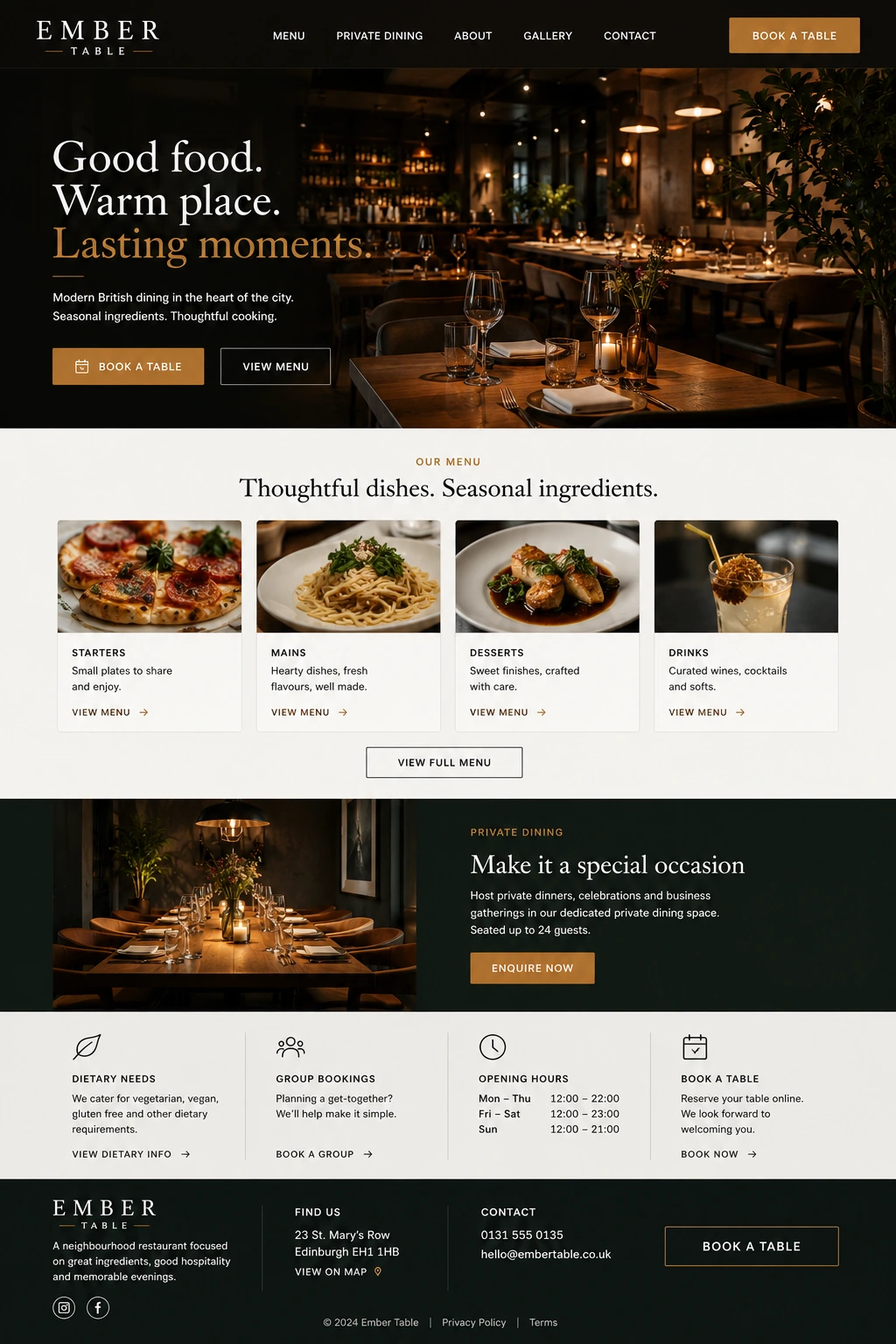
Ember Table needed visitors to see the menu, booking button, dietary notes, and private dining option without digging.

Ember Table restaurant website proof board

A closer look at the page structure used to support service detail, proof, and enquiry intent.

Ember Table website preview

The booking route became the obvious next action.

Visitors could decide whether the restaurant suited their occasion and book from the first page.

Before

The restaurant looked good on social media, but the site did not turn interest into bookings because the CTA and practical details were buried.

What changed

We made booking the primary action, added menu previews, and gave dietary, group, and private dining details their own sections.

Result

Visitors could decide whether the restaurant suited their occasion and book from the first page.

If this restaurant with booking challenge sounds familiar, start by checking fit.

Pixel Peak can help with a new managed website, a redesign of a weak current site, or a startup launch that needs to look credible quickly.

What the project had to handle

The work was shaped around the buyer decisions, proof gaps, and practical friction points that mattered for this specific business.

Booking priority

  • Booking became the dominant action across the page
  • Menu previews supported faster decision-making
  • Private dining was separated from standard table booking

Occasion fit

  • Dietary, group, and location details were placed before contact
  • Visitors could decide suitability without digging
  • Repeated CTAs matched restaurant browsing behavior

Content balance

  • Atmosphere and practical detail worked together
  • Menu content supported confidence without overloading the page
  • Booking route stayed visible after key reassurance sections
Want Similar Clarity

If your restaurant with booking website makes the business feel harder to trust, start with a review.

The first review checks whether clearer positioning, stronger proof, and a more useful enquiry route would help buyers understand the business faster.